

Top 10 Applications of Custom Rubber Parts Across Industries: Enhancing Performance & Durability
2026/07/21
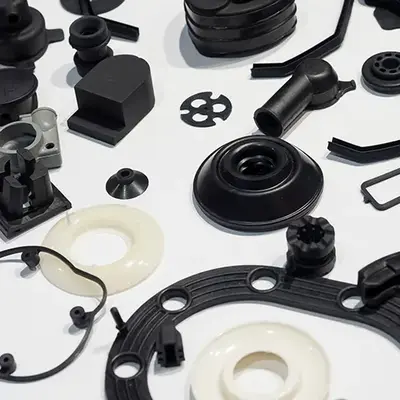
In modern industrial manufacturing, off-the-shelf components often fail to meet the stringent requirements of complex operating environments. Whether enduring extreme temperatures, high pressure, corrosive chemicals, or continuous mechanical vibration, high-precision custom rubber parts play a pivotal role in ensuring system integrity and operational longevity.
As a leading rubber manufacturer specializing in custom molded rubber parts, we deliver custom-engineered rubber products and rubber components designed for superior weather resistance, oil resistance, and fatigue strength. This guide provides an in-depth overview of the top 10 industrial applications for custom rubber components.

Why Modern Industries Require Custom Rubber Parts
Compared to standard off-the-shelf options, OEM rubber parts and ODM rubber products allow engineers to fine-tune material formulations (such as EPDM, NBR, Silicone, and FKM/Viton) and structural designs to achieve critical performance advantages:
- Precision Sealing & Leak Prevention: Custom geometries fit complex assemblies perfectly, eliminating gas and fluid leaks.
- Vibration Damping & Noise Reduction: Absorbs mechanical shock, reducing wear and operational noise (NVH).
- Extreme Environment Resistance: Formulated specifically for high heat, oil exposure, UV radiation, or aggressive chemical contact.
Top 10 Industrial Applications of Custom Molded Rubber Components
1. Automotive & Transportation (Automotive Rubber Parts)
Vehicle components must endure continuous thermal cycling and heavy dynamic stress.
- Key Components: Rubber Bushings and Rubber Mounts are critical for engine suspensions and chassis systems to isolate vibration. Rubber Dust Boots and Rubber Bellows protect steering linkages and drive shafts from dirt and debris contamination.
2. Medical & Life Sciences (Medical Rubber Products)
Medical-grade rubber products must comply with FDA and ISO 10993 biocompatibility standards, predominantly utilizing liquid silicone rubber (LSR).
- Key Components: Biocompatible Rubber Seals, peristaltic pump tubing, and microfluidic valves ensure sterile and leak-free fluid management.
3. Electronics & Semiconductor Manufacturing
Semiconductor processing demands cleanroom compatibility, ultra-low outgassing, and high vacuum seals.
- Key Components: Rubber Grommets protect internal wiring from sharp metal edges, while high-performance FFKM Rubber Seals maintain vacuum integrity in wafer chambers.
4. Industrial Machinery & Automation (Industrial Rubber Parts)
Automated manufacturing systems rely heavily on durable industrial rubber parts for motion control and material handling.
- Key Components: Rubber Suction Cups are essential for pick-and-place robotics, while Rubber Bushings cushion high-frequency mechanical impacts.
5. Aerospace & Defense
Aerospace applications demand flawless performance under extreme pressure fluctuations and temperature swings.
- Key Components: High-fluorine fluorocarbon (FKM) Rubber Seals and fuel system boots ensure flight safety and system longevity.
Custom Rubber Components Reference Matrix
| Component Name | Primary Function | Typical Elastomers | Target Industries |
|---|---|---|---|
| Rubber Seals | Prevents liquid and gas leakage | FKM, NBR, EPDM, Silicone | Automotive, Aerospace, Semiconductor |
| Rubber Bushings | Absorbs shock, minimizes friction | NBR, CR, Natural Rubber | Automotive Suspensions, Heavy Machinery |
| Rubber Mounts | Isolates motor vibration & reduces noise | NR, EPDM, SBR | Engines, Generators, Appliances |
| Rubber Suction Cups | Vacuum gripping and material handling | Silicone, NBR, Polyurethane | Automated Packaging, Robotics |
| Rubber Dust Boots | Blocks dust, moisture, and debris | EPDM, Neoprene (CR) | Steering Columns, Medical Equipment |
| Rubber Grommets | Shields cables from mechanical abrasion | EPDM, Silicone, NBR | Electrical Cabinets, Wire Harnesses |
6. Food & Beverage Processing
Sanitary rubber components must comply with FDA 21 CFR 177.2600 and withstand CIP (Clean-in-Place) sanitation cycles.
- Key Components: Food-grade Silicone and EPDM Rubber Seals and filling valve gaskets.
7. Construction & Heavy Equipment
Off-highway equipment and structural bearings face high loads and harsh outdoor weathering.
- Key Components: Expansion joint seals, bridge bearing pads, and heavy-duty Rubber Mounts.
8. Home Appliances & Consumer Electronics
Household equipment requires reliable waterproofing and ultra-quiet motor operations.
- Key Components: Anti-vibration Rubber Bushings for washing machines, heat-resistant seals for appliances, and cable Rubber Grommets.
9. Energy, Oil & Gas
Subsea and downhole equipment operates under high-pressure, high-temperature (HPHT) conditions and sour gas exposure.
- Key Components: Explosive Decompression (RGD) resistant Rubber Seals and blowout preventer components.
10. Marine Engineering
Marine environments require high resistance to saltwater corrosion and long-term UV degradation.
- Key Components: Saltwater-resistant EPDM Rubber Bellows, marine engine dampening pads, and hatch door seals.
Why Partner with an Experienced Rubber Manufacturer?
Manufacturing precision custom molded rubber parts requires a deep understanding of polymer chemistry and tooling design. Partnering with a full-service supplier offering OEM rubber parts and ODM rubber products delivers distinct business advantages:
- Custom Material Formulation: Precise adjustment of durometer (Shore A), tensile strength, and fluid compatibility.
- Tooling Design & Mold Flow Analysis: Minimizes flash, air traps, and structural defects to optimize yield.
- Rigorous Quality Assurance: Certified to ISO 9001 and IATF 16949 standards for total batch consistency.
Frequently Asked Questions (FAQ)
Conclusion
From critical Rubber Seals and protective Rubber Grommets to dynamic Rubber Bellows, investing in engineered custom rubber components protects machinery, extends operational lifespans, and reduces total cost of ownership.
Looking for an experienced Rubber Manufacturer for your next project? Contact our engineering team today to discuss your custom specifications!
Other News
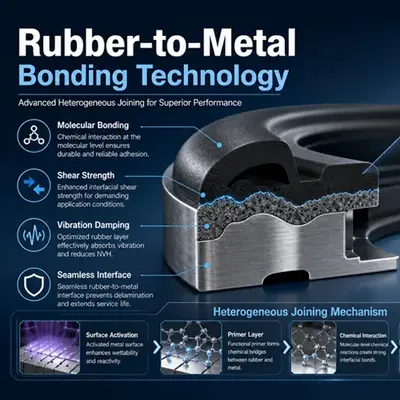
Rubber-to-Metal Bonding Design Guide: Enhancing Shear Strength and Durability in Custom Seals
2026/09/11
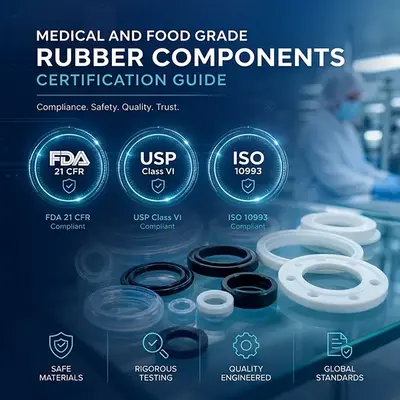
Medical & Food Grade Rubber Certification: FDA, USP Class VI & ISO 10993 Guide
2026/08/27
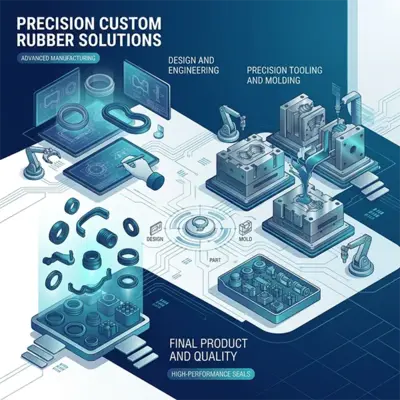
OEM/ODM Customized Rubber Parts Development Process: 6 Steps from 2D/3D Drawings to Mass Production
2026/08/12
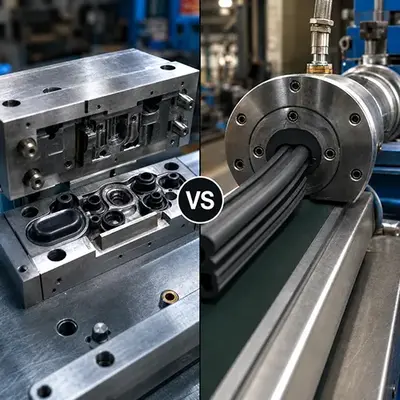
Molded vs. Extruded Rubber: Manufacturing Process & Applications Guide
2026/07/23
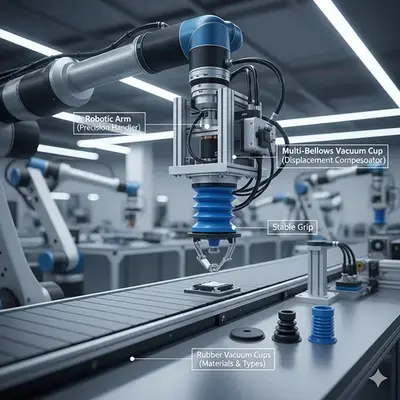
Achieving High-Speed Stable Gripping: How to Select Rubber Vacuum Suction Cups for Stability and Longevity in Robotic Systems
2025/12/03
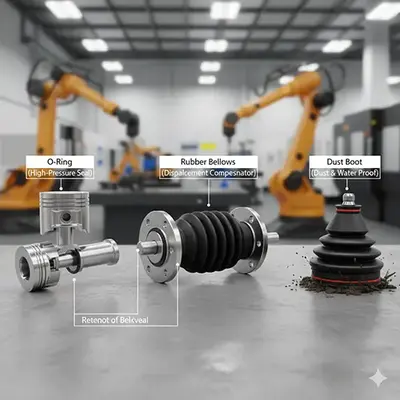
O-Rings, Bellows, Dust Boots: 【One-Minute Guide】Correct Application Scenarios for Rubber Sealing Components
2025/10/20
Rubber Components and Noise Control: Reducing Sound and Vibration Across Industries
2025/07/22

Top 5 Medical Rubber Applications Revealed – The Elastic Technology Behind Modern Healthcare
2025/06/06
Unsung Heroes of Your Vehicle: The Complete Guide to Rubber Automotive Parts
2025/05/15

A Complete Guide to Industrial Rubber Seals, Gaskets, and Vibration Dampers
2025/03/28

What Makes Rubber Bellows So Essential?
2024/12/20
Types of Rubber Materials Used in Seals and Their Applications
2024/12/13